
The short answer
For most lifters, start with a medium grip: hands slightly wider than shoulder width, wrists stacked over elbows near the bottom, shoulder blades pulled back and down. Use a wider grip only when it is pain-free, controlled and useful for the day?s chest-focused work. If the front of the shoulder complains, narrow the grip and reduce load.
Source-backed instruction
- Want more lower/mid chest emphasis? A wider grip can increase shoulder horizontal-adduction demand and abdominal/sternocostal pec activity.
- Want more triceps and upper-chest involvement? A narrower grip increases elbow demand and triceps activity.
- Want a safer default? Avoid extreme width first. A 2024 shoulder-load study found grip width, scapula pose and lateral bar forces change shoulder loading.
- Have shoulder pain? This article is educational. Stop the painful variation and get qualified assessment if pain persists.

Research links are PubMed-indexed. The practical cues below are based on studies linked through PubMed, the National Library of Medicine search database. This does not mean PubMed endorses the article.
What the studies actually say
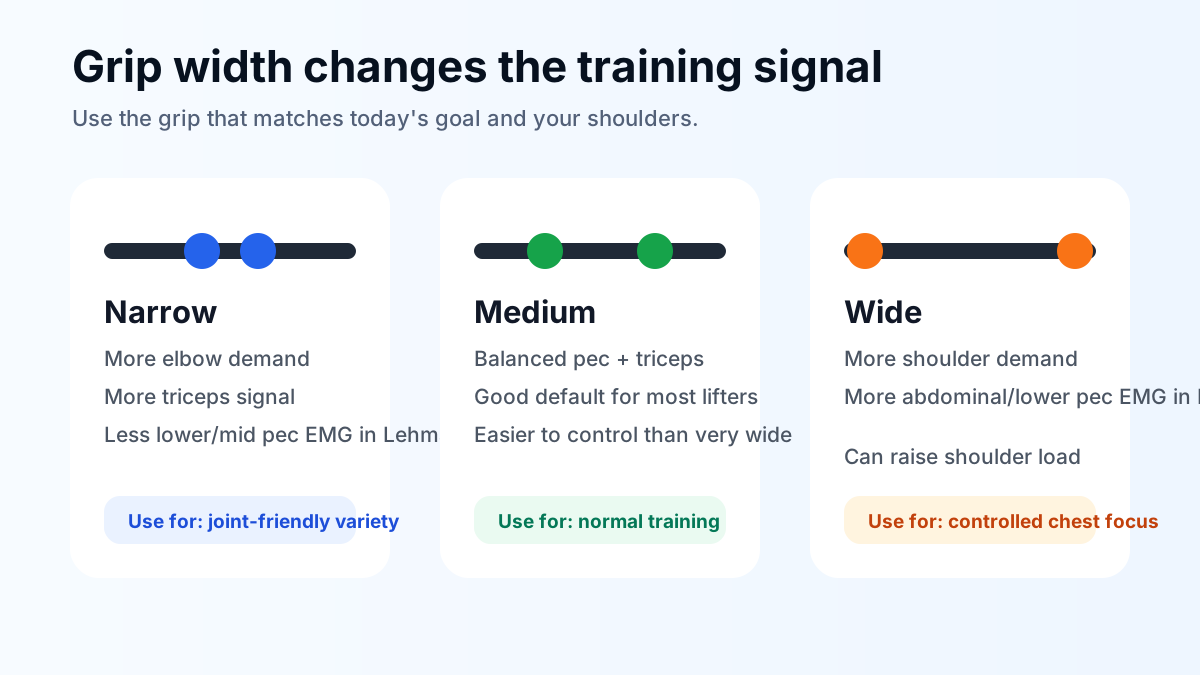
In 12 healthy men using isometric bench press holds, moving from wide to narrower grips increased triceps activity and decreased sternoclavicular pectoralis activity, unless the grip was supinated.
In strength-trained adults, narrower grips induced larger elbow net joint moments and more triceps/anterior deltoid/clavicular pec EMG, while wider grips elicited larger shoulder net joint moments and more abdominal-head pec EMG.
In competitive bench press athletes, medium and wide flat-bench grips allowed higher 6RM loads than narrow grip. The authors recommended wide-grip flat benching for high-load hypertrophy training in bench athletes.
In experienced strength athletes, grip width, scapula pose and lateral barbell forces influenced shoulder joint loads. Narrower grips below 1.5 bi-acromial widths and scapular retraction reduced some modeled shoulder load measures.
The practical grip decision
| If your goal is... | Use this grip first | Why |
|---|---|---|
| General chest training | Medium grip | It balances chest stimulus, control and shoulder comfort for most lifters. |
| Chest-focused heavy work | Medium-to-wide grip | Research links wider grip with greater shoulder horizontal-adduction demand and lower/mid pec signal. |
| Triceps emphasis | Narrower grip | Narrower grips increase elbow demand and triceps activity. |
| Shoulder irritation | Narrower or neutral-handle option | Do not force a wide grip through front-shoulder pain. |
How to find your starting grip
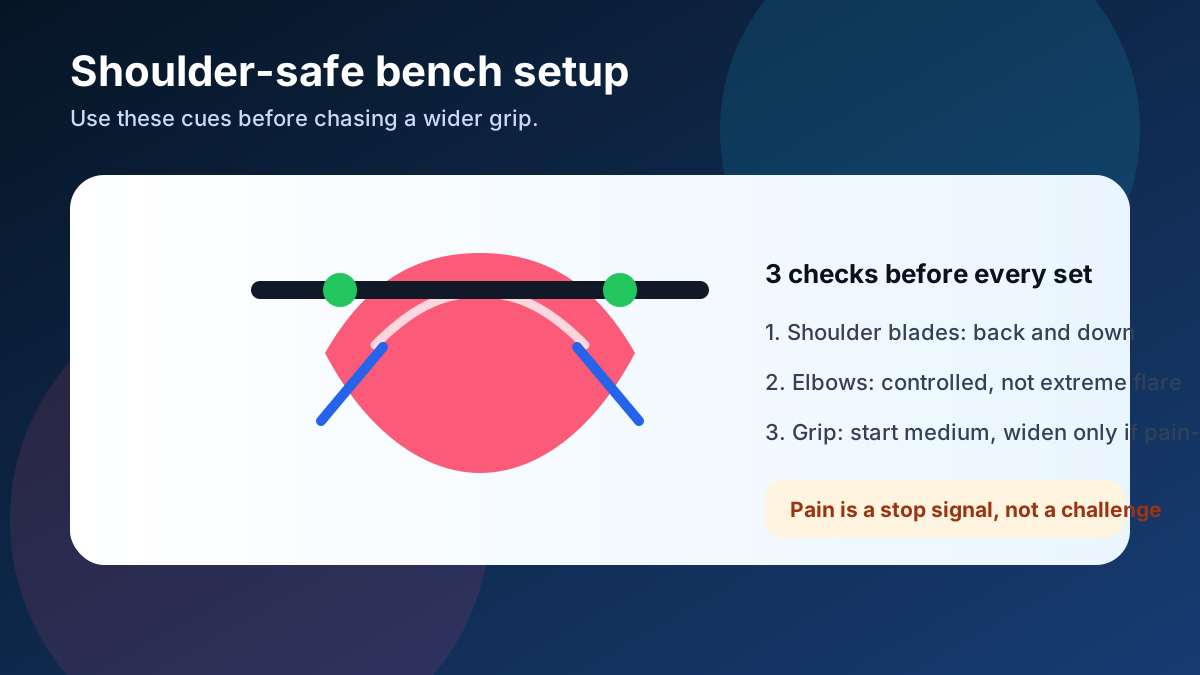
- Set the shoulders first. Lie down, pull shoulder blades back and down, and keep your chest tall without losing control of the ribs.
- Choose a medium grip. Start where your forearms look close to vertical near the bottom position.
- Run two warm-up sets. Check whether the bar path feels controlled and the front of the shoulder stays quiet.
- Only then widen slowly. Move one finger-width or one ring-marker at a time. Do not jump straight to maximum legal powerlifting width.
- Keep the winner. The best grip is the widest grip you can control without pain, if your goal is chest emphasis. Otherwise, use the grip that fits the training block.
The 3 cues that matter most
When not to use a wide grip
Skip wide-grip benching if it creates sharp front-shoulder pain, pinching, numbness, unusual weakness, or pain that lasts after training. Switch to a narrower grip, reduce load, try dumbbells or a neutral-grip bar, and speak with a qualified clinician if symptoms persist.
A simple weekly way to use grip width
- Day 1: Chest strength. Medium-to-wide grip, heavy but controlled, no shoulder pain.
- Day 2: Upper chest/triceps support. Narrower grip or incline variation, moderate load.
- Day 3: Technique or volume. Medium grip, slower tempo, focus on scapula and bar path.
What not to copy blindly
Powerlifters may use wide grips to reduce range of motion and maximize load under competition rules. That does not automatically make the widest grip the best hypertrophy or joint-friendly choice for every lifter. Use the research as a decision tool, then let your shoulder response and training goal decide.
Sources and references
- Lehman GJ. Grip width and forearm position during flat bench press. PubMed PMID: 16095407
- Mausehund L, et al. Understanding Bench Press Biomechanics. PubMed PMID: 33555823
- Saeterbakken AH, et al. Bench press variations in competitive athletes. PubMed PMID: 28713459
- Noteboom L, et al. Bench press technique variations and shoulder loads. PubMed PMID: 38974522